
Soda-lime glass, the foundation of my practice, begins with materials drawn from the earth: silica, soda ash, and limestone. Historically, soda ash was produced from the ashes of sodium-rich plants, linking plant life directly to the substance of glass itself.
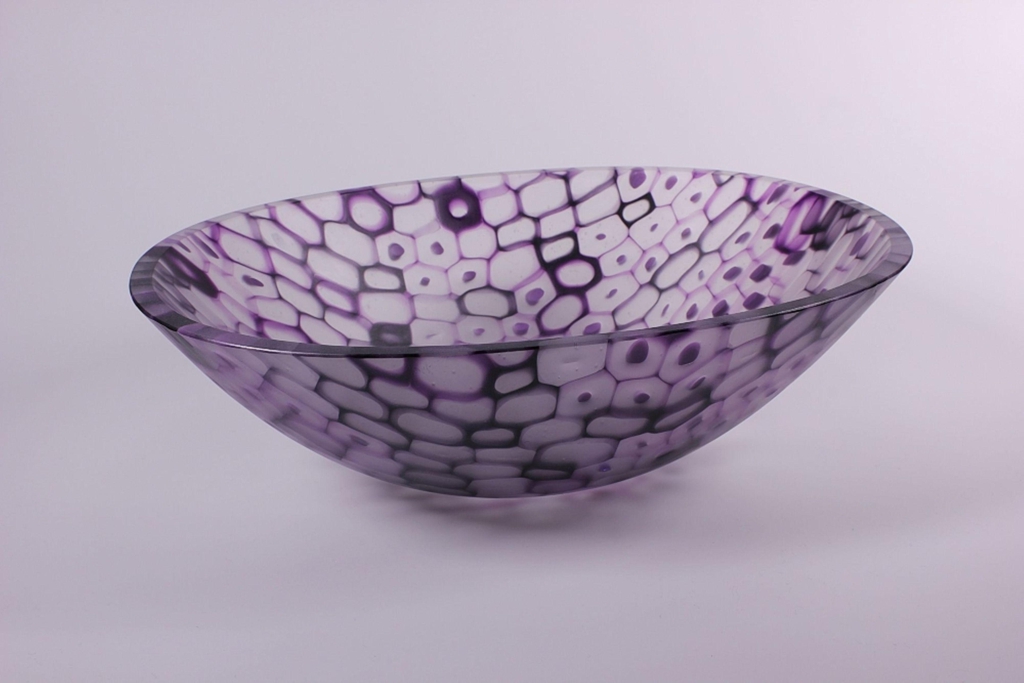
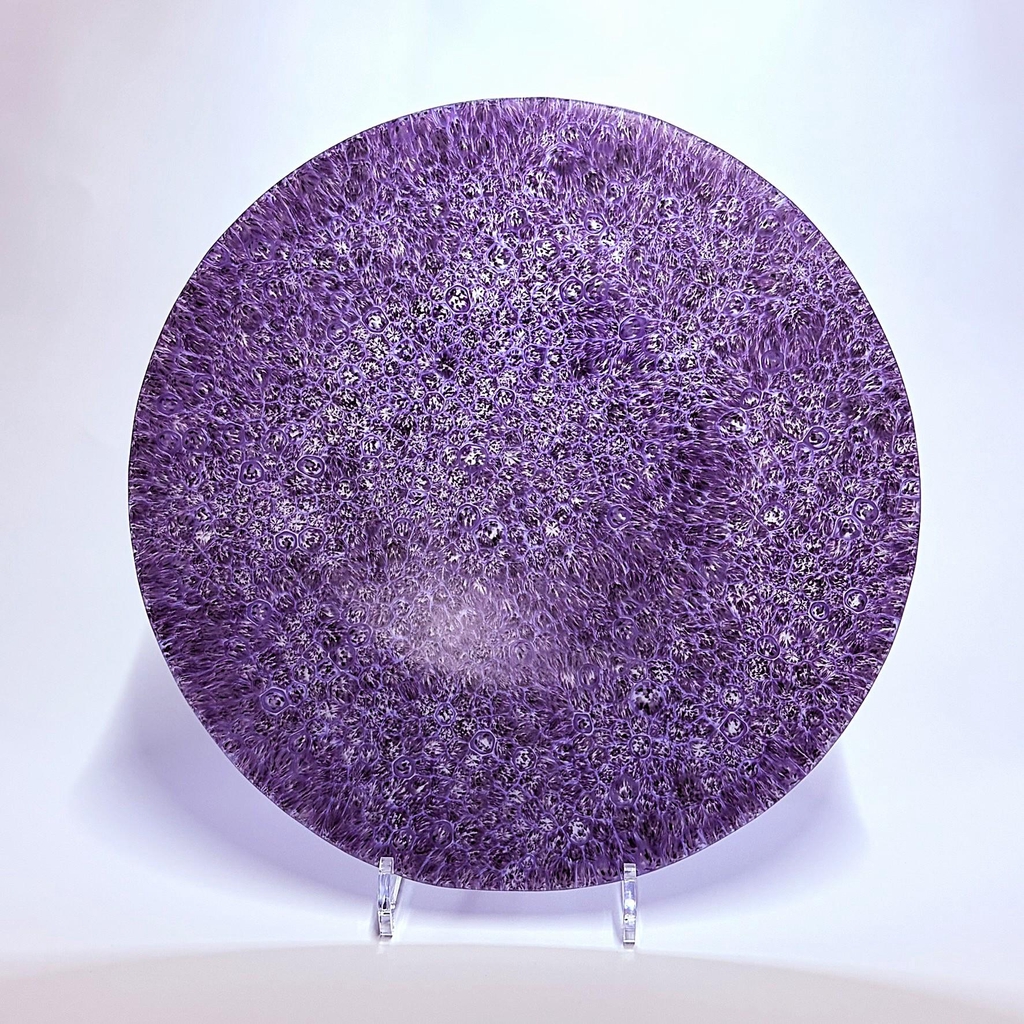
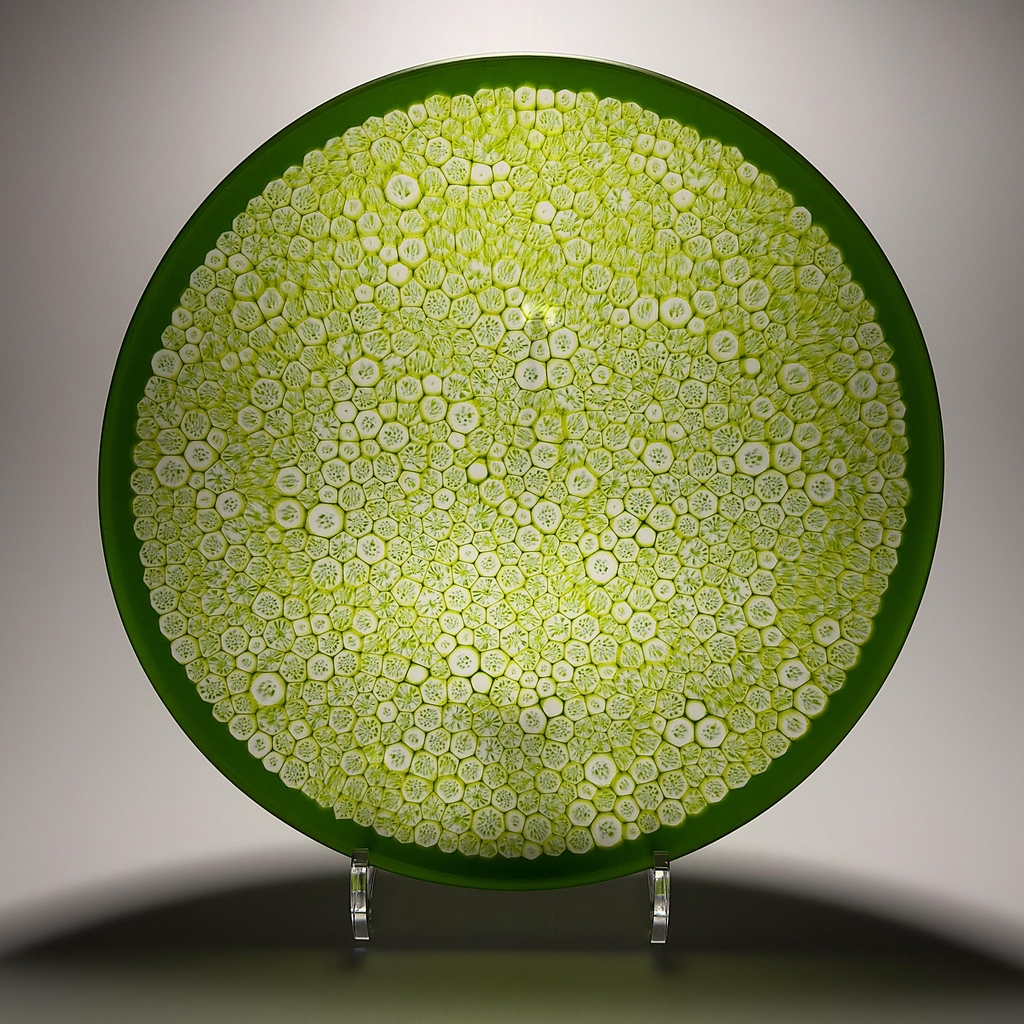
In this body of work, that relationship becomes the starting point for a microscopic exploration of the natural world. Using hand pulled vitrigraph murrine, a reinterpretation of a historic Venetian glass technique, kiln-formed vessels translate the cellular structures of plants into intricate glass patterns.
This work draws on the close study of plant cells, particularly those found in Allium cepa (onion), Lavandula angustifolia (lavender), and Plagiomnium rostratum (moss). Their cellular forms — membranes, internal structures, and repeating geometries — become the basis for the murrine patterns embedded within each vessel. Through this process, microscopic biological systems are translated into glass compositions that reveal a hidden layer of the natural world.
Colour emerges through the presence of earth metals in the glass; manganese, neodymium, erbium, iron, chromium, and gold — elements that shift and refract within the vessels.
Through these works, I investigate how living, fluid cellular structures can be reimagined in glass; a material that itself contains traces of the natural world from which those plants once grew.