
What is Vitrigraph Murrine?
Hand-pulled vitrigraph murrine is at the heart of my contemporary fused glass practice.
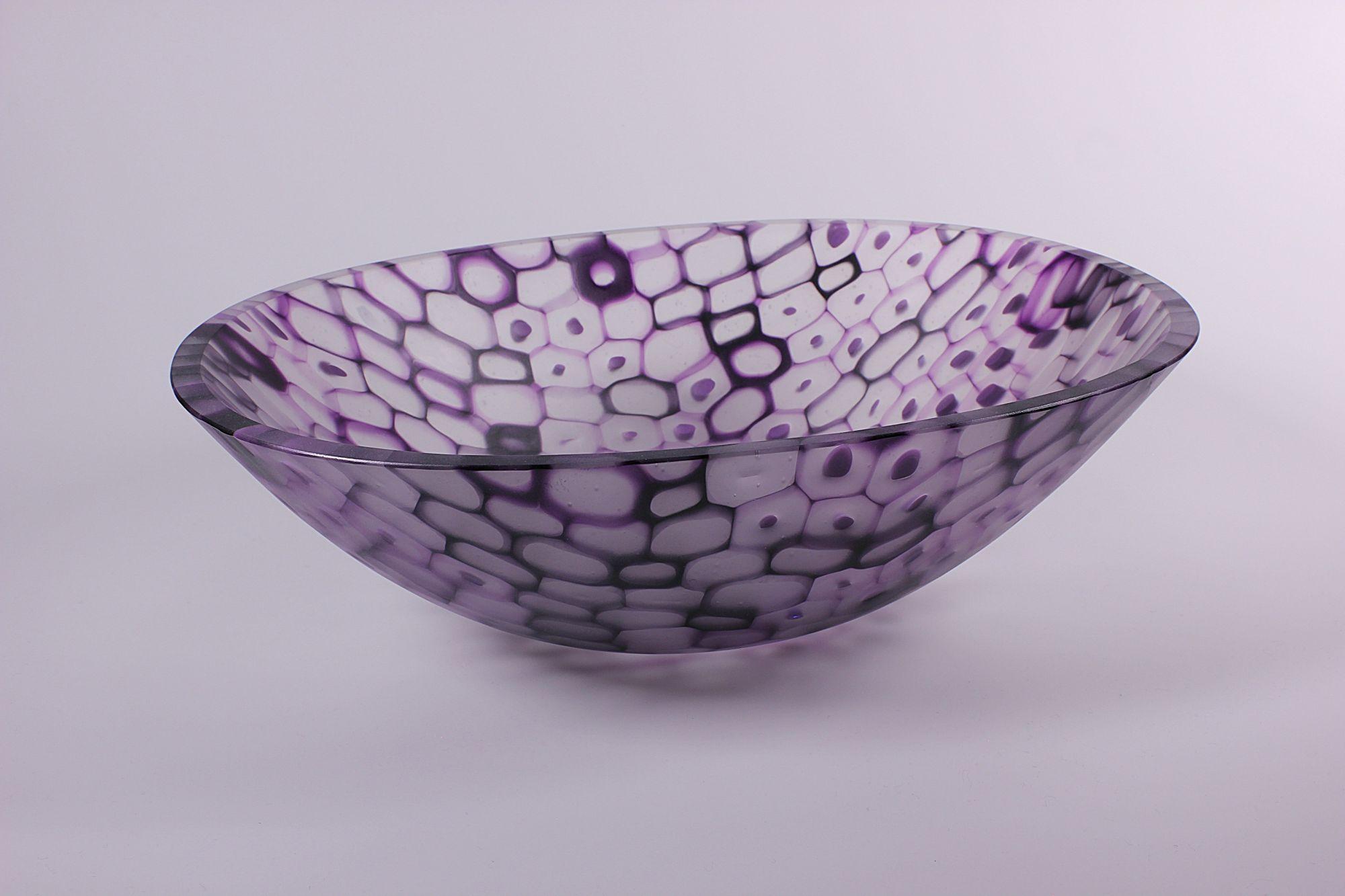
Murrine (singular: murrina) are patterned glass created by forming layers of coloured glass into a larger cane, that are revealed when sliced into thin cross-sections.
Typically, murrine is created in a hot shop, layering coloured glass over one another and stretching that glass between two people. With vitrigraph, the process begins by carefully stacking layers of coloured glass inside a terracotta pot and placing that pot into an elevated vitrigraph kiln. When the glass is heated to a molten state, it can be drawn from the underneath of the kiln to create a long glass cane containing a detailed internal pattern.
Once annealed and cooled, the cane is sliced into individual pieces known as murrine with each section revealing a small piece of the overall design. These individual pieces can then be arranged alongside hundreds of others to create much larger patterns and compositions.
This is what makes murrine so fascinating to me: a pattern created in one piece of glass can be repeated, rotated and rearranged to produce an entirely new artwork. This process gives me a way to build complex patterns from the inside of the glass outwards. It also allows colour, repetition, scale and form to be explored through individually made glass elements.
My work combines the heritage of Venetian murrine with contemporary kiln-forming techniques, creating distinctive handmade glass artwork in my North Yorkshire studio.